
Dyslexia
It is not a disability.
It is a different ability.
What is Dyslexia?
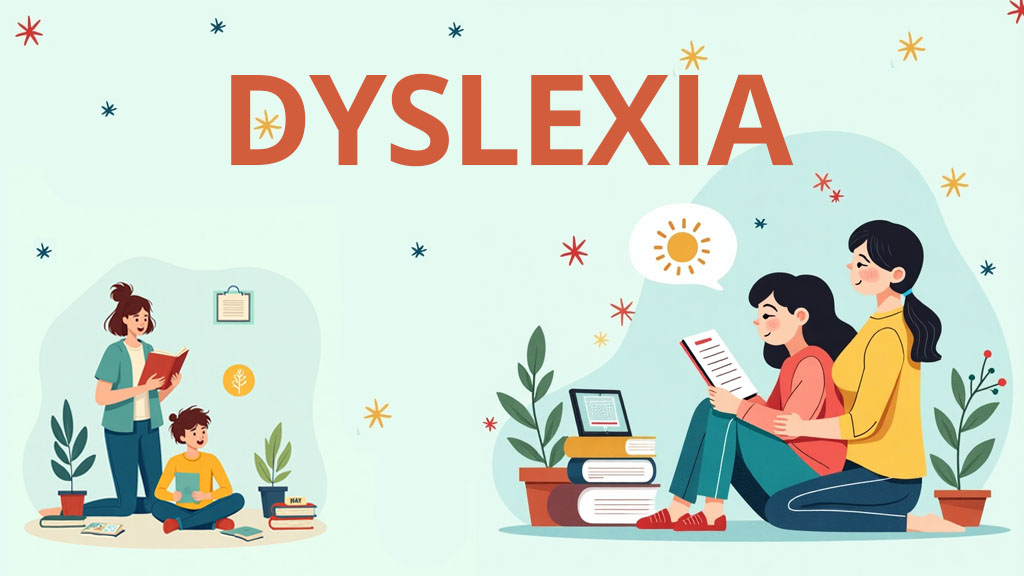
Dyslexia is a learning disorder that involves difficulty reading due to problems identifying speech sounds and learning how they relate to letters and words (decoding). Also called a reading disability, dyslexia is a result of individual differences in areas of the brain that process language.
It is a great responsibility to raise children and make them better citizens. This responsibility becomes more challenging when children have to deal with some unique problems. Dyslexia is one such challenge. It is a type of learning disorder, and a child with dyslexia has difficulty reading, understanding, and memorizing the language or symbols like other children, and they lag behind the rest of the children in the examinations.
Dyslexia is not due to problems with intelligence, hearing, or vision. Most children with dyslexia can succeed in school with tutoring or a specialized education program. Emotional support also plays an important role.
Though there’s no cure for dyslexia, early assessment and intervention result in the best outcome. Sometimes dyslexia goes undiagnosed for years and isn’t recognized until adulthood, but it’s never too late to seek help.
Symptoms
Signs of dyslexia can be difficult to recognize before your child enters school, but some early clues may indicate a problem. Once your child reaches school age, your child’s teacher may be the first to notice a problem. Severity varies, but the condition often becomes apparent as a child starts learning to read.
Before School
Signs that a young child may be at risk of dyslexia include:
- Late talking
- Learning new words slowly
- Problems forming words correctly, such as reversing sounds in words or confusing words that sound alike
- Problems remembering or naming letters, numbers, and colours
- Difficulty learning nursery rhymes or playing rhyming games School age
School-age
Once your child is in school, dyslexia symptoms may become more apparent, including:
- Reading well below the expected level for age
- Problems processing and understanding what is heard
- Difficulty finding the right word or forming answers to questions
- Problems remembering the sequence of things
- Difficulty seeing (and occasionally hearing) similarities and differences in letters and words
- Inability to sound out the pronunciation of an unfamiliar word
- Difficulty spelling
- Spending an unusually long time completing tasks that involve reading or writing
- Avoid activities that involve reading
Teens and adults
Dyslexia signs in teens and adults are a lot like those in children. Some common dyslexia symptoms in teens and adults include:
- Difficulty reading, including reading aloud
- Slow and labour-intensive reading and writing
- Problems spelling
- Avoid activities that involve reading
- Mispronouncing names or words or problems retrieving words
- Spending an unusually long time completing tasks that involve reading or writing
- Difficulty summarizing a story
- Trouble learning a foreign language
- Difficulty doing math word problems
What are the types of dyslexia?
The three main types of dyslexia are:
- Primary Dyslexia
- Secondary Dyslexia
- Developmental Dyslexia
Primary Dyslexia
These are usually problems in letter and number recognition, reading, arithmetic, and other activities that are transmitted from the left side of the mind.
Secondary Dyslexia
Common teaching methods in schools around the world mainly use the left-side brain due to which children with dyslexia have problems in studying.
Developmental Dyslexia
It is caused by problems in brain development in the fetus, in which words are identified and spelt wrongly.
When to see a doctor
Though most children are ready to learn reading by kindergarten or first grade, children with dyslexia often have trouble learning to read by that time. Talk with your healthcare provider if your child’s reading level is below than what’s expected for your child’s age or if you notice other signs of dyslexia.
When dyslexia goes undiagnosed and untreated, childhood reading difficulties continue into adulthood.
Causes
Dyslexia results from individual differences in the parts of the brain that enable reading. It tends to run in families and appears to be linked to certain genes that affect how the brain processes reading and language.
Risk factors
A family history of dyslexia or other reading or learning disabilities increases the risk of having dyslexia.
Complications
Dyslexia can lead to several problems, including:
- Trouble learning – Reading is a skill basic to most other school subjects. A child with dyslexia is at a disadvantage in most classes and may have trouble keeping up with their peers.
- Social problems – If left untreated, dyslexia may lead to low self-esteem, behaviour problems, anxiety, aggression, and withdrawal from friends, parents, and teachers.
- Problems as adults – The inability to read and comprehend can prevent children from reaching their potential as they grow up. This can have negative long-term educational, social, and economic impacts.
- Children who have dyslexia are at increased risk of having attention-deficit/hyperactivity disorder (ADHD) and vice versa. ADHD can cause difficulty keeping attention. It can also cause hyperactivity and impulsive behaviour, which can make dyslexia harder to treat.
Conclusion
In this article, we have discussed many important topics and issues related to dyslexia.
Hope you have liked the information.
Take care and stay healthy.