


About Our
Collaboration with LSCFT
About Our Collaboration with LSCFT
Good news! A.Health and LSCFT are working together because we believe everyone deserves clear understanding and timely support regarding neurodevelopmental differences like ADHD.
Through this partnership, we combine A.Health’s innovative, user-friendly approach with LSCFT’s trusted expertise and care network. Our shared goal is to provide assessments that offer deep insights (clinically thorough), are straightforward to access (easily accessible), and are completely centred around your unique journey (designed around the individual).
If you’re a parent, carer, or an adult seeking clarity and a path forward, you’re in the right place! Our dedicated team is excited to guide and support you every step of the way.


Stronger Together
This program is a special collaboration! LSCFT chose to partner with A.Health because we specialise in understanding and supporting young people with ADHD in a fresh, positive way. We’re bringing our expertise and unique tools directly to you, working hand-in-hand with the LSCFT services you might already know. Our shared goal? To make sure you get the best possible support tailored specifically for your amazing ADHD brain.

How We See ADHD
At A.Health, we don’t just see challenges. We see “Awesome Different Highly Dynamic Brains!” We believe ADHD brings unique strengths, like incredible creativity, boundless energy, and the power of hyperfocus. Our approach is all about helping you understand how your brain works, harnessing those strengths, and learning strategies for the trickier parts. We use positive language and focus on what makes you, you.
Our Promise To You
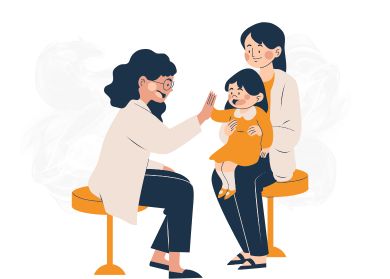
Our team has loads of experience working with young people just like you. We promise to listen without judgement, offer understanding, and provide practical support. We want you to feel heard, valued, and empowered. From the first chat to ongoing check-ins, we’re committed to being your supportive guide on this journey, helping you build confidence and thrive.

Our Neurodevelopmental Services
Our Neurodevelopmental Services
Through our partnership with LSCFT, A.Health offers a full suite of assessment services for both children and adults, including:

adhd
Assessment
In-depth consultations and diagnostic tools guided by clinical experts.

Comprehensive
Report
Detailed diagnostic reports shared with patients, GPs, and schools (if applicable).

Post-Assessment Guidance
Resources and recommendations to help patients navigate next steps.
Assessments are provided online and in-person, depending on what works best for you.

Getting Started: Let’s Chat!
As part of your LSCFT care pathway involving A.Health, we’ll start by talking with you and your family. We want to understand your experiences. Then, we conduct a thorough assessment in a relaxed way to see if ADHD is the right fit and how we can best help. It’s all about getting to know you.
Your Personalised Roadmap
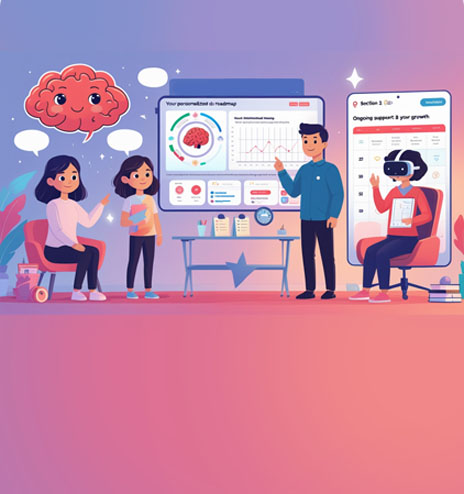
If the assessment shows ADHD, you’ll get a dedicated A.Health Care Coordinator. They’re your personal guide through this process, supporting you and your family. Together, we create a Personalised Plan just for you, using insights from our assessment and potentially cool tech like Virtual Reality to make learning fun and effective!

Ongoing Support & Your Growth
Our support, coordinated with LSCFT, continues beyond the initial steps. We offer regular check-ins, access to resources, and help you practise strategies. We’ll focus on building your skills, boosting your confidence, and celebrating your ADHD superpowers so you can truly succeed and feel great.

Step 1: Initial Screening and Triage
All new bookings and referrals will undergo an initial triage by a clinical team. This screening will determine the patient’s eligibility and priority for further assessment.
Step 2: Patient Contact
After the initial triage, suitable patients will be contacted via phone and in writing.
A thorough explanation of the assessment process, timeframes, communication channels, and how medication (if needed) will be prescribed and dispensed
Step 3: Allocation to Service
Patients will be assigned to the most appropriate service, either a virtual ADHD assessment or a face-to-face assessment, depending on their needs.
Step 4: Pre-Assessment
Before the assessment, patients will have a pre-assessment appointment where they are guided to:
- Complete necessary questionnaires for themselves or their children.
- Gather relevant information from schools and other key sources.
Step 5: Data Collection and Appointment Scheduling
Once all required information is submitted through the a.health digital portal for review.
Step 6: ADHD Assessment
The patient will undergo a virtual or face-to-face assessment conducted by a consultant psychiatrist. The assessment will take 90 minutes to 2 hours.
Step 7: Report and Recommendations
After the assessment personalised report will be sent to the patient or parents, containing detailed recommendations for both home and school to support the child’s development.
Step 8: Medication Discussion (If Required)
If medication is recommended, a follow-up appointment with the consultant will be scheduled. The patient and their family will be fully informed about:
- The role of medication in ADHD treatment.
- Potential benefits and side effects and monitoring requirements.
Step 9: Physical Health Check
Once the family agrees to start medication, the patient will need to complete a physical health check.
Step 10: Medication Initiation
The results of the physical health check will be reviewed by the clinical team. If no contraindications are found, medication will be initiated.
Step 11: Titration and stabilisation
The patient will be monitored by the titration team, starting with a low dose of medication. The dose will be gradually increased on a monthly basis until the patient is stable, typically within 3 to 4 months.
Step 12: Long-Term Follow-Up and Support
The patient will continue to be followed by the titration team in accordance with NICE guidelines. In addition to medication management, they will be signposted to behavioral interventions and other support techniques to help manage their ADHD symptoms effectively.
Contact Us
If you have any questions about the A.Health program offered through LSCFT, or how we work, please don’t hesitate to reach out.
Please fill out this form and get in touch with us
Your message has been sent

Crisis and Resources
If you or someone you know needs support, here are some available resources offering information, advice, and immediate help.
Regional & Condition Specific Support
ADHD North West
Provides information, advice, and guidance for supporting young people with ADHD or those undergoing assessment.
CAMHS Duty (Mon-Fri)
Contact for further support if concerned about a child’s mental health or changes in presentation. Select the number for your area:
- Preston: 01772 777344
- Chorley South Ribble: 01772644644
- West Lancashire: 01695684262
- Fylde and Wyre: 01253957166
- Lancaster and Morecambe: 01524550020
- South Cumbria: 01225408660
National Helplines & Text Services
SHOUT Text Service
A free, confidential, 24/7 text messaging support service for anyone struggling to cope.
Lancashire Care Wellbeing and Mental Health Helpline
Available Mon-Fri 7pm-11pm, Sat/Sun 12 noon-midnight.
Samaritans
Confidential support for people experiencing feelings of distress or despair. Available 24 hours a day.
Childline
Support for children and young people in the UK. Calls are free and confidential.
Online Support & Information
Papyrus & NSPCC
Consider accessing online support resources from Papyrus (Prevention of Young Suicide) and the NSPCC (National Society for the Prevention of Cruelty to Children).
YoungMinds
Offers education, advice, and support on mental health issues for young people. Includes a parent helpline and a 24/7 text service (details on their site).
Kooth
An online mental wellbeing community offering a chat platform with counsellors (until 10pm nightly), education, and general advice.
NHS LSCft – Crisis Support Info
Additional information specifically about Crisis Support can be found on the Lancashire & South Cumbria NHS Foundation Trust website.
Healthy Young Minds (LSC)
Provides a variety of advice, guidance, and support related to the mental health and emotional wellbeing of children and young people in Lancashire & South Cumbria.
Urgent Mental Health Crisis Support
Emergency / Cannot Keep Safe
If you feel you cannot keep your child safe at home or in an immediate emergency situation.
Or Call: 111 (NHS Non-Emergency)
Mental Health Urgent Response Line (LSC)
Staffed 24/7 by trained mental health professionals providing assessment and referrals to appropriate services within Lancashire & South Cumbria.
Want to know more?
A.Health is leading the way to revolutionize tech in health.
You can read more to learn about various topics such as ADHD, pulmonary rehabilitation, and more.

Comprehensive Guide to ADHD: Symptoms, Diagnosis, and Support
Attention Deficit Hyperactivity Disorder (ADHD) is a complex neurodevelopmental condition that affects both children and adults. Characterized by persistent patterns of inattention, hyperactivity, and impulsivity, ADHD can significantly impact daily functioning and development. As awareness grows, more people are seeking…

Depression
What is depression? A Note From Concept Health Technologies Depression is a common condition that affects millions of people every year. Anyone can experience depression — even if there doesn’t seem to be a reason for it. The good news…

Asperger’s Syndrome
What is Asperger’s Syndrome? People with autism spectrum disorder (previously referred to as Asperger’s syndrome) may benefit from early diagnosis and the use of support networks. Children with this condition who attend school may be eligible for individual education programs…

Parenting a Child With ADHD
Tips and Tricks to Understand and Help Your Child’s ADHD Problems As a mother of a child with ADHD, understanding and effectively managing their ADHD-related challenges can significantly impact their well-being. 1. Educate Yourself Read reputable books, articles, and online…

Phobia
A phobia is a type of anxiety disorder that causes an individual to experience extreme, irrational fear about a situation, living creature, place, or object. When a person has a phobia, they will often shape their lives to avoid what…
Do I Have ADHD?
ADHD has become an identity, not just a disorder. We need a new way to talk about it. We desperately need to find a new way to talk about attention deficit hyperactivity disorder. In the past couple of years, we…
ADHD Management and Care: A Guide for Mothers and Children
How To Manage ADHD This article aims to provide guidance to mothers and children regarding the organization of their everyday lives, as well as tips on caring for children with ADHD. By implementing strategies and adopting a supportive approach, mothers…

Behavioural Problems in Children & How to Manage Them
All young children can be naughty, defiant, and impulsive from time to time, which is perfectly normal. However, some children have extremely difficult and challenging behaviours that are outside the norm for their age. Behavioural problems in children can manifest…
Dyslexia
DyslexiaIt is not a disability.It is a different ability. What is Dyslexia? Dyslexia is a learning disorder that involves difficulty reading due to problems identifying speech sounds and learning how they relate to letters and words (decoding). Also called a…
How To Manage Anxiety
What Can I Do To Manage My Anxiety? An anxiety disorder is like any other health problem that requires treatment. You can’t will it away. It’s not a matter of self-discipline or attitude. Researchers have made a lot of progress…

Managing ADHD in Children: Tips for Mothers
As a mother of a child with ADHD, you may often find yourself facing unique challenges in maintaining a calm and organized household. However, with the right strategies and a supportive approach, you can help your child thrive and develop…
Autism Spectrum Disorder
What Is Autism Spectrum Disorder (ASD)? Autism spectrum disorder (ASD) is a neurological and developmental disorder that affects how people interact with others, communicate, learn, and behave. Although autism can be diagnosed at any age, it is described as a…